The Drowning of Democracy
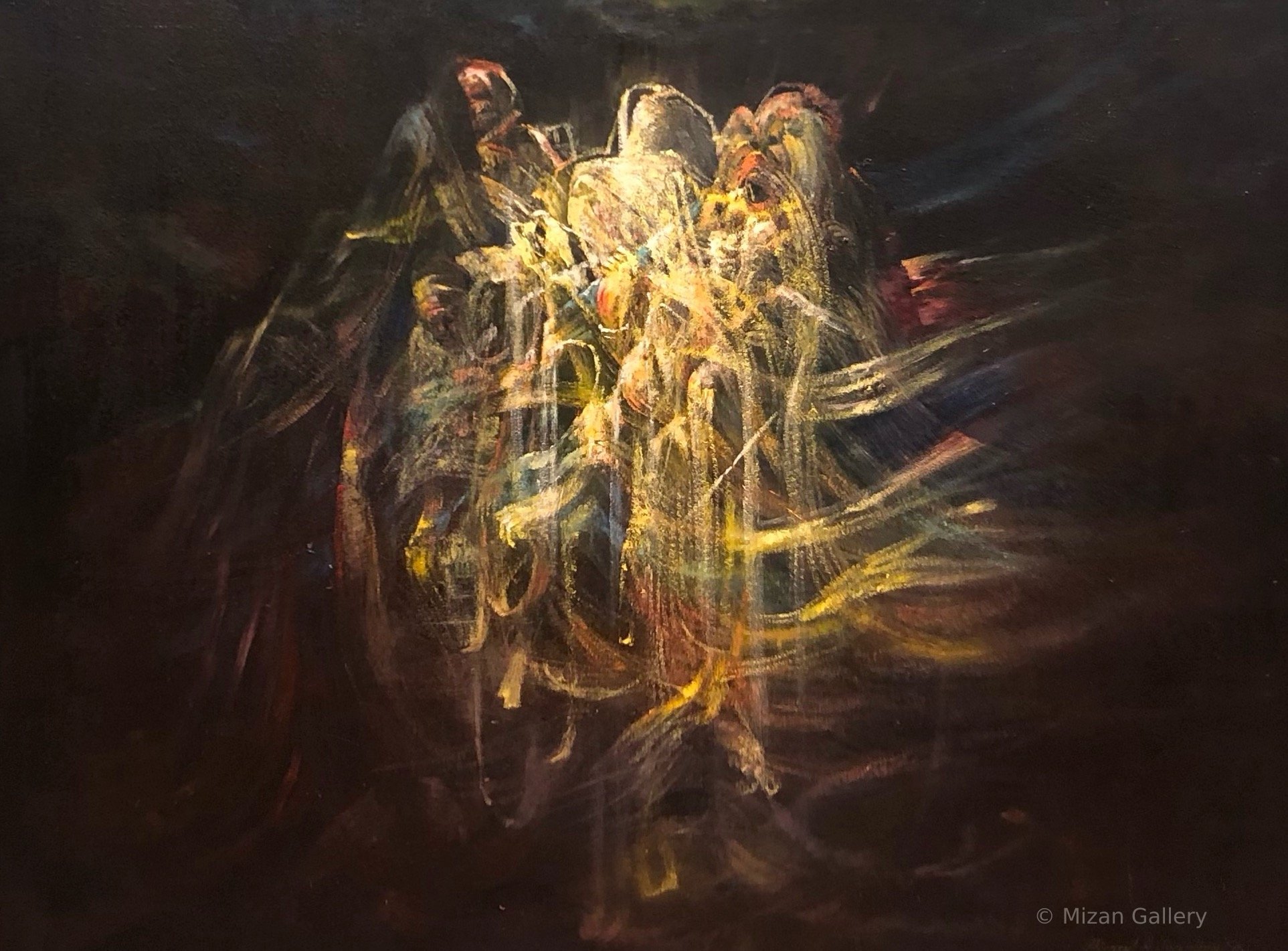
This painting, a captivating blend of shadows and light, takes on a haunting, almost otherworldly aura, resembling spirits in a graceful dance. These figures, fluid and elusive, evoke the sense of ghosts from the past - perhaps revolutionaries whose fervor and ideals have transcended time.
However, within this ethereal dance lies a deeper, more somber narrative. The painting subtly alludes to the death of democracy, a concept metaphorically depicted through figures submerged in water, their hands bound, symbolizing the suppression and helplessness experienced in times of political turmoil. This powerful imagery speaks to a sinister reality where the very act of rising up, of striving for freedom, is fraught with insurmountable challenges.
Amidst these dark waters, some figures are depicted struggling to ascend, their efforts a poignant portrayal of resilience in the face of oppression. Yet, interspersed among these are others who have succumbed, their still forms a somber reminder of the ultimate sacrifice made by many in the fight for democratic ideals.
The 'spirits' in the dance, therefore, embody a dual nature – both celebratory and solemn. Their movement, captured in the painting's strokes, becomes a symbol of liberation and an unburdening of the soul, even as it acknowledges the grim realities of political strife. They dance in a moonlit landscape that merges with the water's reflections, creating a visual symphony of freedom, remembrance, and eternal hope, tempered by the sobering acknowledgment of those who have fallen in the quest for a just and free society.
The Drowning of Democracy is a poignant reflection on the cost of revolution and the enduring spirit of those who continue to rise in the face of adversity, honoring both the triumphs and sacrifices of past and present revolutionaries.
- Artist: Mizan
- Year: 1996
- Category: Modern
- Tags: oil,wax,color,drift
- Size: W:42 × H:36 inch